
Automotive Miniatures for Serious Collectors
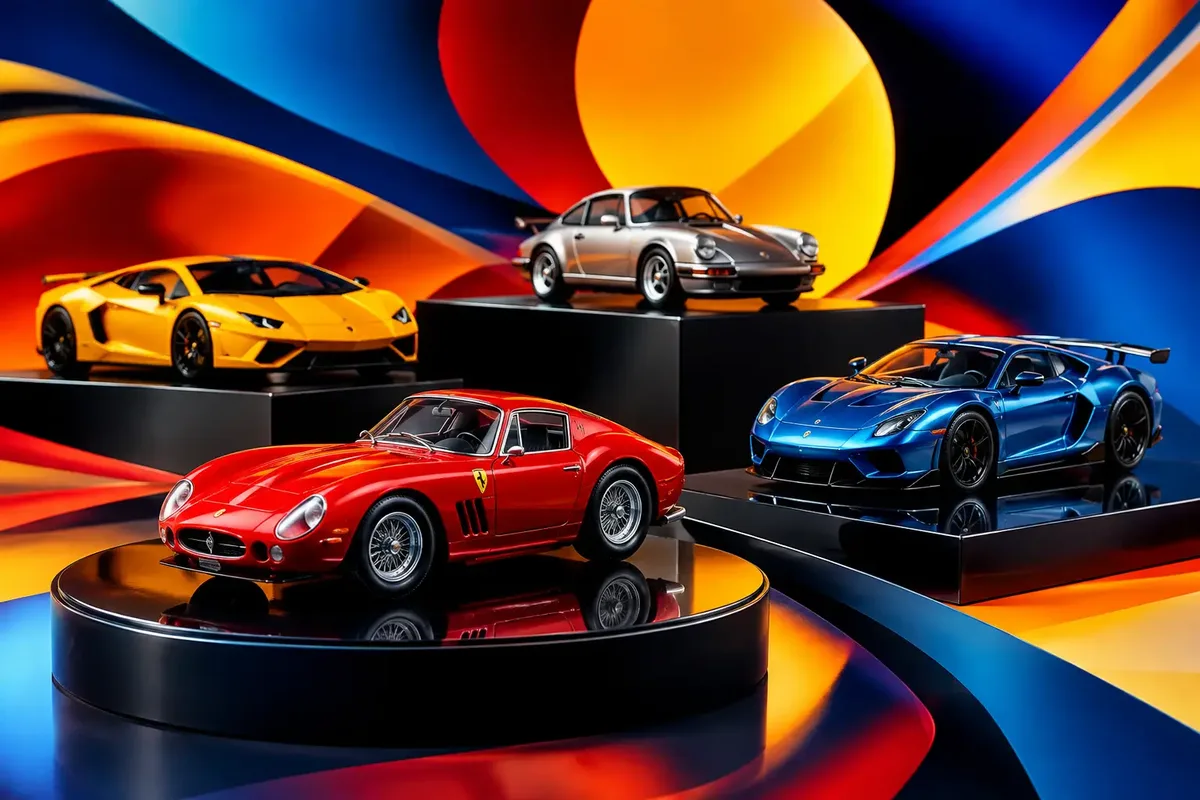
A 1:64 model can be a quick shelf addition or a carefully researched release that took months to secure. That difference defines automotive miniatures as a collecting category. The strongest collections are not necessarily the largest. They are built around informed choices on scale, manufacturer, material, accuracy, release timing, and the space available to display them properly.
For collectors following new releases, the challenge is rarely finding something to buy. It is separating officially announced products from rumors, understanding what a listed price represents, and deciding whether a pre-order belongs in the collection before it sells through. A structured approach makes the market easier to follow, whether your interest is modern GT racing, Japanese tuner cars, American muscle, Formula 1, or historically important road cars.
Start With a Collection Focus
A collection without boundaries can become expensive and difficult to display surprisingly fast. A clear focus does not prevent variety, but it gives each purchase a reason to be there. Some collectors build around one marque, such as Porsche or Nissan. Others follow a racing series, a decade, a color theme, a specific body style, or a favorite movie and motorsport era.
Scale is often the most practical starting point. It affects cost, storage, detail level, and the number of releases available. A collector who enjoys frequent new liveries may prefer 1:64. Someone drawn to opening doors, detailed engine bays, and large display pieces may build around 1:18. Neither approach is more serious than the other. The right scale depends on what you want to see when you look at the shelf.
It also helps to decide whether the collection is meant to be comprehensive or selective. Completing every version of a model can be satisfying, but it requires patience and a larger budget. A selective collection of landmark cars, best-known liveries, or personally meaningful vehicles is usually easier to sustain.
Automotive Miniatures by Scale
Scale tells you how the model relates to the full-size vehicle, but it does not guarantee a certain level of quality. A well-executed 1:64 release can have excellent proportions, sharp tampo printing, and correct wheels. A larger model can still disappoint if its shape, stance, or trim details are inaccurate.
1:64: Compact, Active, and Deep
At roughly three inches long for many cars, 1:64 is the most space-efficient major scale. It has a broad release calendar, from accessible mainline diecast to limited-run premium models. Makers such as MINI GT, Tarmac Works, Auto World, and Hot Wheels cover different corners of the category, including street cars, race cars, Japanese classics, and American subjects.
The trade-off is that fine details are necessarily compressed. Opening features are uncommon, interior visibility varies, and packaging can become a meaningful part of the collectible. For collectors who buy multiples, track variations, or want a large display without dedicating an entire room to it, 1:64 offers exceptional range.
1:43: A Traditional Collector Scale
1:43 occupies a useful middle ground. It provides more visible body lines, interiors, badging, and racing graphics than most 1:64 releases while remaining manageable in a cabinet. Norev, Minichamps, and several specialist makers have long histories in this scale, particularly for European road cars and motorsport.
This is often a strong choice for collectors interested in vehicle history. A 1:43 lineup can show the development of a manufacturer or racing class without demanding the cost and footprint of larger models. Check the product specification carefully, however. Some releases are sealed resin models, while others use diecast construction or include opening parts.
1:18 and 1:24: Display Presence
Larger scales reward close inspection. In 1:18, details such as brake discs, seat belts, engine components, fabric-style belts, and suspension work can become part of the appeal. Solido offers accessible large-scale models, while BBR and other premium makers serve collectors seeking finer materials, limited editions, and highly detailed finishes.
1:24 also remains relevant, particularly in model kits and classic American subjects. Kits add a different dimension: the finished result reflects the builder's preparation, paintwork, assembly, and finishing skill. A built model can be more personal than a factory-finished piece, but it takes time, tools, and practice.
1:8: The Premium Statement Piece
A 1:8 model is closer to display art than casual shelf stock. These large-format replicas can reveal extraordinary detail, especially when produced by specialist makers such as Amalgam Collection. They also require careful consideration of price, lead time, shipping, display protection, and available space.
For most collectors, one carefully chosen 1:8 model makes more sense than trying to collect broadly at that scale. The question is not simply whether it is impressive. It is whether the particular car has lasting importance to you.
Diecast, Resin, and Model Kits
Material affects how a model looks, feels, and functions. It also affects what should be expected from the price.
Diecast models typically use metal body components with plastic and rubber parts. They have a satisfying weight and can support opening doors, hoods, trunks, or removable panels, especially in larger scales. Diecast construction does not automatically mean better accuracy, but it remains appealing to collectors who value moving features and traditional model-car construction.
Resin models are generally sealed, with no opening parts, but the material allows makers to reproduce low-volume or complex body shapes that may not justify expensive diecast tooling. Resin is common in premium limited editions and niche race cars. Its trade-off is that collectors should inspect paint quality, wheel alignment, and assembly closely, since a sealed model cannot be opened to view the interior or engine bay.
Model kits are a separate decision entirely. An AMT kit, for example, offers the chance to choose period-correct paint, wheel fitment, engine details, and finishing style. The purchase price may look attractive, but the total project cost can rise once paint, glue, tools, decals, and display protection are included. For builders, that is part of the value rather than a drawback.
Evaluate a Release Before You Pre-Order
Pre-orders are useful because many limited or popular releases are easiest to obtain before their official release date. They also involve uncertainty. Product photos may be digital renderings, specifications can change, and estimated arrival windows may move due to production or shipping delays.
Before committing, confirm the manufacturer, scale, material, product name or identifier, edition details, and listed status. Compare the official manufacturer information with the shop listing if both are available. Pay attention to whether the stated price is a manufacturer reference price, an estimated retail price, or a retailer's current pre-order price. Taxes, shipping, import costs, and retailer allocation can create substantial differences for US collectors.
Limited-edition numbers deserve context as well. A numbered run can indicate scarcity, but it does not automatically establish long-term demand. A well-known racing livery, an accurately executed vehicle, or a model from a respected maker may matter more than a low production figure alone.
Accuracy Is More Than a Feature List
Collectors often compare opening parts, photo-etched details, or wheel construction. Those features are useful, but the silhouette comes first. If the roofline, track width, wheel diameter, or ride height looks wrong, additional detail may not rescue the model.
Look closely at official photos for panel gaps, livery placement, tampos, headlight treatment, tire sidewalls, and the relationship between the wheels and fenders. For race cars, verify the event, car number, driver lineup, and sponsor markings when that history matters to you. Licensing limitations can occasionally affect graphics or names, so an accurate-looking release may still differ from the original car in small but important ways.
It is reasonable to have different standards at different price points. A budget 1:64 should not be judged by the same criteria as a premium 1:18 resin model. What matters is whether the model delivers the accuracy and finish its category promises.
Build a Release-Tracking Routine
The market moves across many manufacturers, regions, and release calendars. A simple tracking routine prevents missed announcements and reduces impulse purchases. Keep a short want list organized by priority: must-have, interested, and wait for reviews. Record the scale, maker, approximate price, release window, and whether the product is announced, listed, pre-order, or released.
Car Model Store is designed for this type of research, bringing maker, scale, material, status, product identifiers, and official product destinations into one collector-facing release view. It is especially useful when several brands announce products in the same month and you need to compare where a limited budget will have the most impact.
Once a model arrives, inspect it before discarding packaging. Check for loose mirrors, paint rubs, detached parts, warped bases, or cracked cases. Keep original boxes for premium pieces and limited releases when possible. Packaging supports safer storage and can matter if you later trade, sell, or reorganize the collection.
A focused collection grows best when each new model earns its position. Keep watching official announcements, compare specifications before the pre-order window closes, and share worthwhile finds with fellow collectors who will appreciate the details.