
Hot Wheels Premium Releases: What Collectors Track
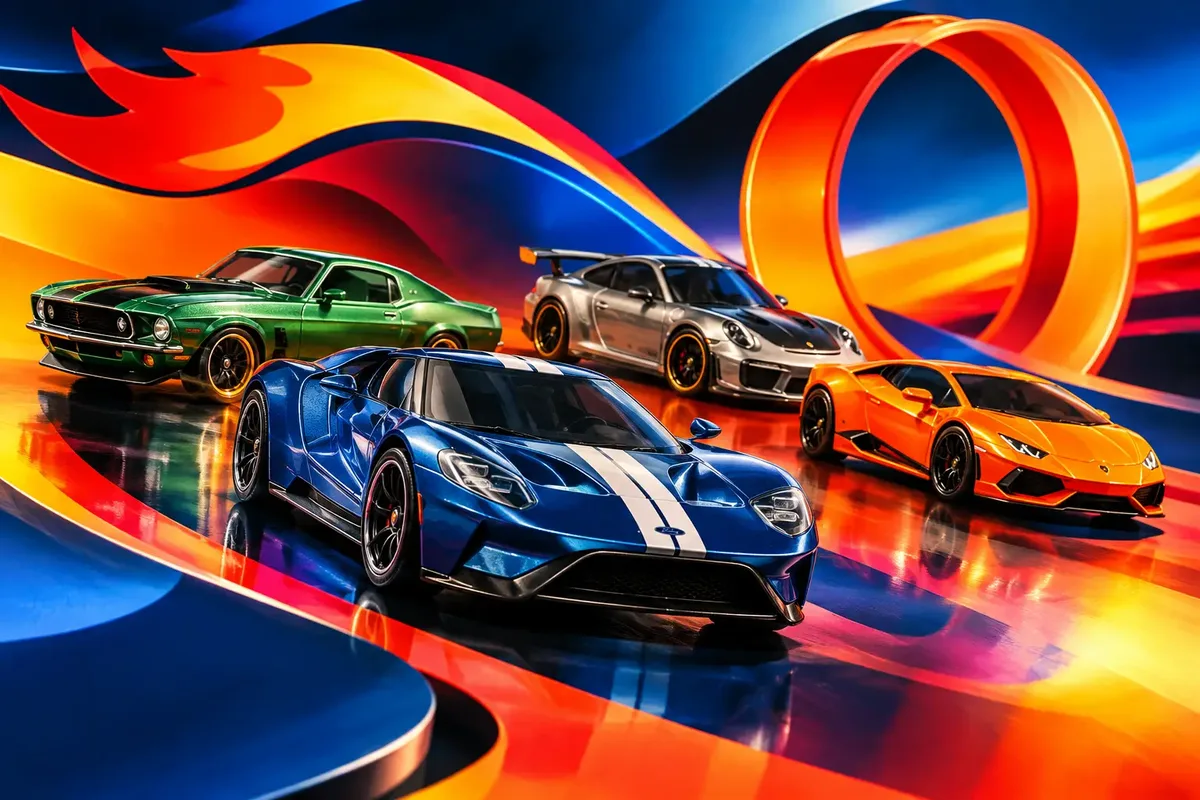
A new Hot Wheels Premium release can look simple at first glance: a familiar casting, a themed card, rubber tires, and a price above mainline. For collectors, the useful questions begin after that first look. Which line is it part of? Is the casting newly tooled or returning with a new livery? Is the listing confirmed by Hot Wheels, available for pre-order, or already arriving at retail? Tracking Hot Wheels premium releases well means separating official release information from retailer expectations and secondary-market noise.
What makes a Hot Wheels release Premium?
Hot Wheels uses Premium branding across several collector-oriented assortments, but the term is not a single product format. Car Culture, Boulevard, Team Transport, Pop Culture, and other themed releases can differ in packaging, vehicle count, subject matter, and distribution. What they generally share is a higher-spec presentation than a standard mainline car.
The usual collector markers are Metal/Metal construction and Real Riders tires. Metal/Metal refers to a diecast metal body and chassis, while Real Riders are rubber tires rather than the plastic wheels found on most basic releases. Those features add weight, detail, and display appeal, but they do not make every Premium item equally scarce or equally desirable.
Most releases are marketed around the 1:64 category, although exact proportions vary by casting. That is normal for Hot Wheels. The brand’s traditional approach favors a model that reads correctly at small scale and works within its packaging and play heritage, rather than strict scale consistency across every vehicle. A collector comparing a Porsche, pickup, race car, and wagon should treat 1:64 as the display category, not a promise of identical dimensions.
Hot Wheels Premium releases are driven by the line
The line name often tells collectors more than the vehicle name alone. A Car Culture assortment may center on a motorsport era, marque, region, or enthusiast scene. Boulevard is known for individual releases packaged for collectors, while Team Transport pairs a vehicle with a transport truck or hauler. Pop Culture can shift the focus toward licensed entertainment, graphics, and period advertising.
That distinction matters when assessing demand. A race-liveried import may appeal strongly to JDM and motorsport collectors, while a film vehicle can attract fans who do not otherwise buy diecast. Transport sets can bring a higher ticket price because the package contains more than one vehicle, not necessarily because each individual component is harder to find.
A release also has to be judged within its own assortment. A popular casting in an average theme may move differently from an obscure casting in a highly anticipated series. Collectors often focus on one car, but distribution and demand usually operate at the case and assortment level.
Casting history still matters
Before placing a pre-order, look at the casting rather than only the card art. A new tool may justify special interest because it introduces a vehicle Hot Wheels has not previously offered in that form. A returning tool may still be compelling if it has a faithful racing livery, a period-correct wheel choice, or details that suit the subject.
Repeated castings are not automatically a negative. Many collectors build variations of specific models, liveries, or racing teams. The trade-off is straightforward: if you only want one example of a car, a new colorway may not add much. If you collect a marque or a particular competition history, small differences can be the reason to buy.
How to read a listing before ordering
The best release listing answers practical questions quickly. Start with the manufacturer and product line, then confirm the vehicle name, assortment or product identifier where available, stated scale category, material description, and release status. Product photography is useful, but it should support the text rather than replace it.
Status deserves particular care. “Announced” means a product has been presented but may not yet have a firm retail arrival. “Pre-order” means a seller is accepting orders, often based on expected allocation. “Listed” can simply mean a product page exists. “Released” may mean the manufacturer has shipped, while “in stock” means a specific retailer has physical inventory. These terms are related, but they are not interchangeable.
Price should also be read as context, not certainty. Suggested pricing, retailer pricing, shipping, state sales tax, import costs, and regional distribution can all change the final amount paid by a US collector. A Premium single, a multi-car set, and a Team Transport package should not be compared by sticker price alone. Compare what is included, where it is being sold, and whether the item is realistically available at that price.
For a clean collection record, keep the manufacturer name, line, vehicle, release status, approximate price, and date you first saw the official announcement. Add the retailer and order date only after you commit. This small habit prevents duplicate orders and makes it easier to identify what is genuinely new versus a restock or a delayed arrival.
Pre-orders help, but they are not guarantees
Pre-orders are especially useful for collectors who want complete themed sets, popular licensed cars, or releases that may not appear consistently at local stores. They can reduce the time spent hunting, and they provide a clearer expected cost than buying from the secondary market after release.
The limitation is allocation. A retailer may list a future assortment before final quantities are confirmed. Delivery estimates can move, and a pre-order can be adjusted or canceled under the seller’s published terms. That does not mean pre-orders are unreliable by default. It means collectors should choose established sellers, understand payment timing, and avoid treating an estimated arrival month as a fixed release date.
There is also a case for waiting. If a release is widely distributed, buying after actual stock arrives lets you review final packaging, compare prices, and combine shipping with other models. Waiting is less attractive for a personal must-have, a limited collector channel release, or a theme you know will be difficult to replace later at normal retail.
Packaging is part of the collectible
Premium packaging carries information beyond presentation. The card, series logo, vehicle artwork, and assortment identity help establish exactly which release a collector owns. For carded collectors, bent corners, crushed blisters, sticker residue, and price labels can affect display value and resale interest.
Loose collectors face a different calculation. Opening a Premium car makes the wheels, stance, and chassis detail easier to enjoy, especially in a diorama or 1:64 display. But an opened model should be stored with its card or packaging if possible. Keeping the original card maintains identification and can help if you later trade, sell, or catalog the model.
Neither approach is more legitimate. The useful choice depends on whether you collect for sealed presentation, detailed display, photography, custom work, or long-term variation tracking.
Avoid confusing scarcity with attention
A fast-selling Premium model is not always rare, and a model still on shelves is not necessarily a poor release. Social-media attention can concentrate around a few castings before broad distribution begins. Conversely, regional availability can make an ordinary release feel impossible to find in one area and common in another.
Collectors are better served by watching official announcements, credible release directories, and multiple retailer listings over time. Car Model Store can be used as one organized reference point for checking maker, scale, material, status, approximate price, and official product information alongside other current model-car releases. That approach is more useful than making a buying decision from a single marketplace asking price.
Condition and completeness matter more than rumor when evaluating a purchase. Confirm the correct card, the stated contents of any set, and whether a listing photo shows the actual item or a manufacturer sample. If the price is unusually high before broad retail availability, patience is often the most valuable collector tool.
Build a collection that has a reason
The most satisfying Hot Wheels Premium collections usually have a clear collecting rule: a favorite marque, Japanese performance cars, endurance racers, movie vehicles, transport sets, or a specific series. A rule does not have to be restrictive. It simply gives a collector a way to decide when a release belongs on the shelf.
Track the releases you genuinely want, verify the status before ordering, and leave room for the unexpected find. When a great Premium model turns up, share it with fellow enthusiasts on Facebook - the best leads in this hobby often start with a collector who noticed a new listing or fresh case first.